- 14 April 2026
- |Leadership
If television is to be believed, politics is a dirty and manipulative business – a take that feels quite at odds with my own experience of having met many generous, kind and socially focused politicians – who also work really very hard.
Like so many of us, I have been captivated by shows such as the long-running political thriller House of Cards, in which congressman Frank Underwood uses a machiavellian mix of coercion, influence and blackmail to wriggle his way up the greasy pole to power.
It is a representation of power-grabbing which is echoed elsewhere across popular culture, in endless TV dramas, social media commentary and the breathless press reporting of political infighting, leaks and backstabbing. All of this has combined to create an almost universally accepted narrative that the political class are untrustworthy and in it for themselves.
I have always been fascinated to know what really happens behind the closed doors of Parliament or Congress. I’m sure it’s no picnic at all but, is it really as dog-eat-dog as we are led to believe?
A week or so ago, I was delighted to have the chance to ask this question and chat directly with a man who sits at the centre of this supposed tangled web of intrigue.
A conversation with the Chief Whip
Over the years my work has brought me in contact with many different MPs of all stripes and even, on one notable occasion, the Prime Minister. I have to say, in the main, I have found them to be well-intentioned and hard-working people who seem to have the best interests of the people they serve – at their heart.
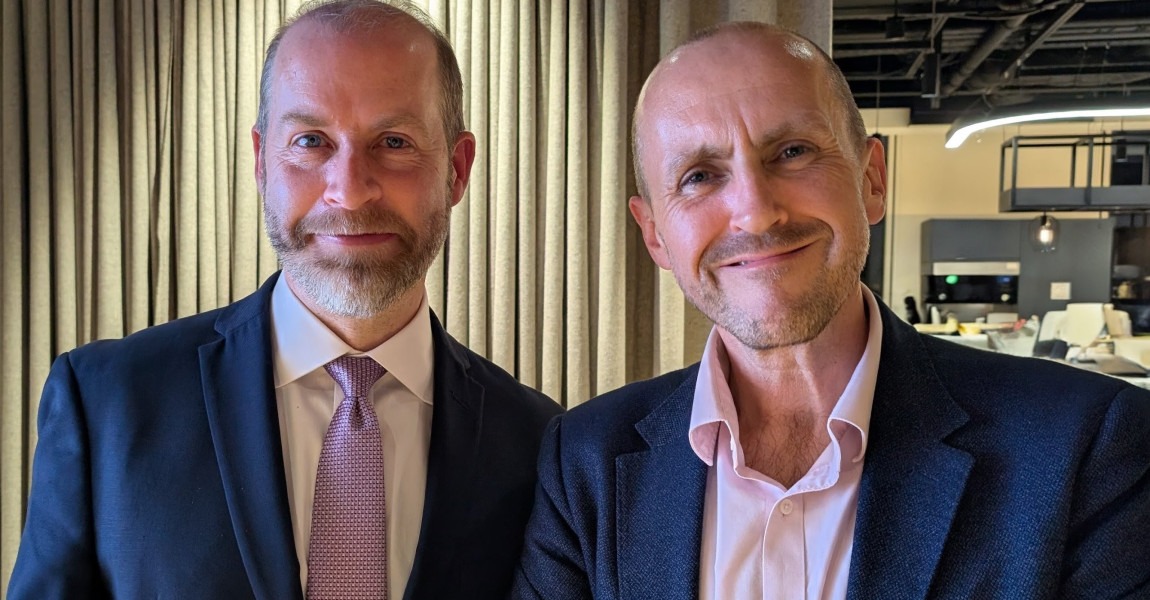
A couple of Friday’s ago, I attended an event with another politician, namely Jonathan Reynolds, the current Chief Whip of the House of Commons.
The job of the ‘whip’ in political parties is to try and persuade individual Members to vote in line with the direction of the leadership. It is a name which has its origins in hunting and the role of the ‘whipper-in’ who keeps the hounds focused on the scent of the fox.
Surely, here was the person who could reveal all of the arm-twisting, pressure and minor menaces involved in getting what you want in the corridors of power.
However, his response to my questioning painted quite a different picture.
“Quite a lot of people think it’s a lot like that TV series, House of Cards,” he said.
“So you can imagine their disappointment when I tell them that nothing could be further from the truth.”
“The truth is James, the most powerful tool is empathy“.
And, of course, this should come as no surprise to anybody who understands truly effective leadership.
Leading the way through empathy and understanding
Far from brow-beating people into cooperation, Jonathan says his approach is much more about listening and truly understanding someone’s reasons for wanting to vote against the government.
Now I’m sure this is partly because, in a world where MPs command a significant social media following, any underhand skullduggery is likely to find its way into the public domain, with all the reputational damage that brings.
However, much more important than this, is that the capacity to see issues from the point of view of particular MPs and the needs of their constituents – is the most effective starting point for getting someone onside.
It is only through a true appreciation of another person’s hopes and, sometimes, fears, that it is possible to find common ground and begin to reconcile them to how a particular course of action – although it may seem counterintuitive on first glance – can lead to a mutually agreeable outcome.
This is a subject I have discussed before in relation to the ever-increasing amount of division in our public and personal discourse. Despite the algorithms, journalists, media commentators and, yes, some political figures who seek to represent people as being at extreme odds with each other, there are universal needs and hopes which bind us together.
Most of us want to be healthy, prosperous, feel loved and look after our families. The challenge is to find ways we can work towards these goals together, with the greatest level of equity and least amount of conflict.
When the conversation with Jonathan inevitably turned to my own work, I was able to – fittingly – empathise with his position.
As a founder bringing a disruptive product to market there are no shortage of critics ready to tell you it won’t work. In the early days of Alertacall, I soon lost count of those who said the I am OK button – now called OKEachDay – was a silly idea.
So, how do you go about ‘changing people’s minds’, turning them from naysayers into advocates and convincing some of them to believe in an idea enough to join you in building a successful business on the back of it?
The answer comes back to some of the essential tenets of sales: Building rapport, listening, finding some emotional resonance and – finally – encapsulating all of this into a compelling story which encapsulates the benefits.
The thing which should be avoided at all costs is to fall into an argument, or to become overly combative. In my experience this will only result in people taking an even more entrenched position than they did previously.
A much better approach is to defuse criticism by accepting it, understanding where it is coming from and telling your story again, in a manner which outlines how the concept you are promoting creates a mutually desirable vision of the future.
At a time when polarisation is at risk of eroding the values of collaboration and acceptance, it is encouraging to know this is the approach being taken by someone like Jonathan, in such an important role in government. I was impressed.
Because, as entertaining as a character like Frank Underwood may be, betrayal, double-crossing and manipulation are ultimately unsustainable when it comes to fostering the trust which is essential to any functioning business, government or society.
As charismatic and devilishly likeable as such figures may be, let’s do our best to keep them where they belong, playing their tricks on our TV screens, while we allow understanding, empathy and common purpose to hold sway in the real world.