- 11 February 2026
- |Uncategorized
Housing policy isn’t very ‘sexy’. Building regs are not topics to get the pulse racing or the cheeks flushing.
And one subject which definitely won’t be deemed ‘sexy’ is the details of the latest requirements of the Decent Homes Standard. In fact, talking about it too much could be considered an effective form of contraception.
However, dear reader, this is exactly what I am going to do. Because one thing I have learned in my career is that just because something isn’t sexy, doesn’t mean it isn’t important and – in some cases – even a matter of life and death.
To illustrate my point, let me take you back to the early days of Alertacall, when we were first installing our OKEachDay system in people’s homes.
I have told the story of OKEachDay and how it works many times so I won’t retell it now. In short, it gives people the option of pressing a button each day to confirm all is well at their homes. If they do not, then a member of our team will contact them to make sure everything is in good order, that they have no repairs to report, and to exchange useful information.
It has also proved a very effective method for preventing undiscovered deaths and protecting people from being left for days in need, especially when compared to traditional panic buttons, which people often refuse to use or cannot access when they need them.
Brushing problems under the carpet
A couple of years after I first started the business, we were given the opportunity to pilot OKEachDay in what you would thing was a very high profile and ‘well to do’ London council.
We wrote to a number of people who were over 65 and living in the council area to offer them free use of the service. One person who accepted was a lady living in a very grand townhouse just a short walk from the river Thames, which had been converted into flats.
Now, I would like to make it plain that although this woman lived in the council’s area, she was not one of the council’s social tenants. The reason for this is that I want it to be clear they were not responsible for the conditions she was living in.
At this point Alertacall only had a handful of employees and I still visited almost every customer personally to install our service and instruct people how to use it (and learn about their needs also). What I found in this particular home was quite shocking.
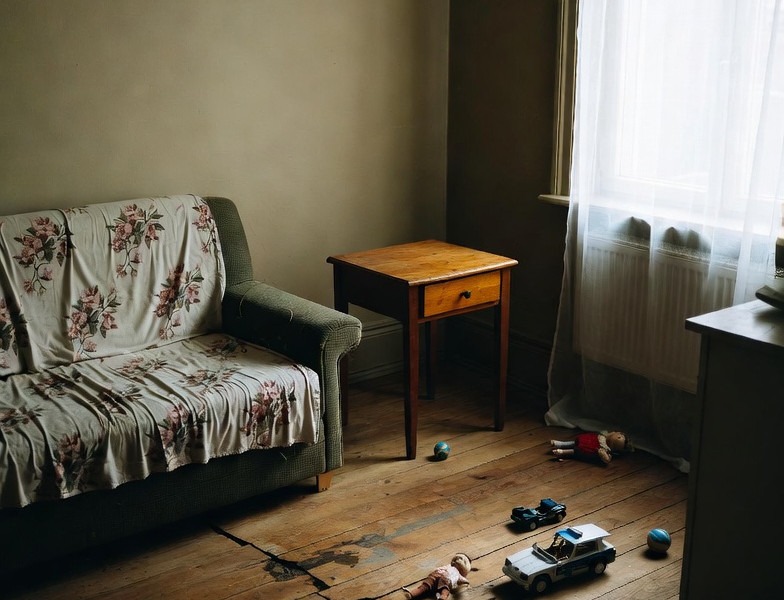
The main issue was the complete lack of carpet, or any floor covering, in any of the rooms. This was allowing cold, damp and draughts to infiltrate from below, as well as providing an opportunity for cockroaches and other insects and invertebrates to infest the house. What’s more, the bare floorboards were filled with sharp, exposed nails and carpet tacks, and provided no barrier to noise from her neighbours below, or vice-versa.
It was a classic case of one issue – a lack of floor covering – being the root cause of many other problems, and a source of misery.
To compound matters, it became clear the woman had severe mental health problems and was considered at risk of suicide, with social services making visits twice a month.
These problems were reflected in the fact that, once OKEachDay was installed, she would often deliberately not press her button in order to prompt a call from us and have the opportunity to speak to somebody. This is quite a regular occurrence among Alertacall customers, many of whom live isolated lives in which their daily interaction with our team is the only human contact they have.
There were also a number of occasions when she made attempts to take her own life and the OKEachDay system was directly responsible for raising the alarm and ultimately saving her.
Despite this, I am sorry to say the story of this early customer in London does not have a happy ending.
Decent homes, decent lives
This all happened at a time when the general understanding of the impact of social isolation and, conversely, the benefits of regular contact were not as well understood as they are today. The OKEachDay concept was also extremely new.
The result of this was that a social worker disconnected our system and replaced it with a more traditional panic button alarm, despite our protests at the time. Tragically, we later learned the woman in question had taken her own life.
Unfortunately, this is not the only story like this I have come across in my time working in the housing sector. As deeply painful as these occurrences are, it is vital to try and learn what we can do to avoid the same thing happening again.
Last month, the Government published an updated Decent Homes Standard, setting out a minimum level of requirements for rented properties.
One of the things which it was decided not to include on the list was a mandate to supply floor coverings as standard.
For the majority of us, it is hard to imagine living in a home with bare floorboards. Carpets and vinyl are a given, in much the same way as running water, electricity and an inside toilet. But this is not the reality for a significant minority of both private and social housing tenants.
It seems incredible that, in the 21st century in one of the richest nations in the world, people can still be expected to live without a carpet, vinyl or similar on the floor, with all the potential impacts that has on their physical and mental health.
The main objection to a requirement to provide floor coverings appears to be cost. But surely there is room for a common-sense approach to find a solution which is acceptable to both landlord and tenant? The alternative – forcing the most deprived in society to live in conditions most of us would consider intolerable – is simply not good enough.
The sad story of that early customer in London also underlines the importance of regular human contact.
I am not going to claim the removal of our service was directly responsible for her taking her own life. There are obviously many drivers which contribute to someone making that decision. But it is clear that when a person is vulnerable and living in tough conditions, it makes sense to have a safety net in place and the opportunity for daily human contact if they wish. Surely it is a no brainer.
Things which may seem everyday – the chance to talk to other people, having a carpet on the floor – make a massive difference. They may not be very exciting or ‘sexy’, but this is because they are more important than that: They are fundamental to giving people not just a decent home but a decent life.